I first walked into Callejón del Beso on a humid Thursday afternoon in 2016. I was in Guanajuato researching colonial architecture for my graduate thesis. I had a list of churches to document, underground tunnels to photograph, and baroque facades to catalog. The narrow alley wasn’t on my itinerary.
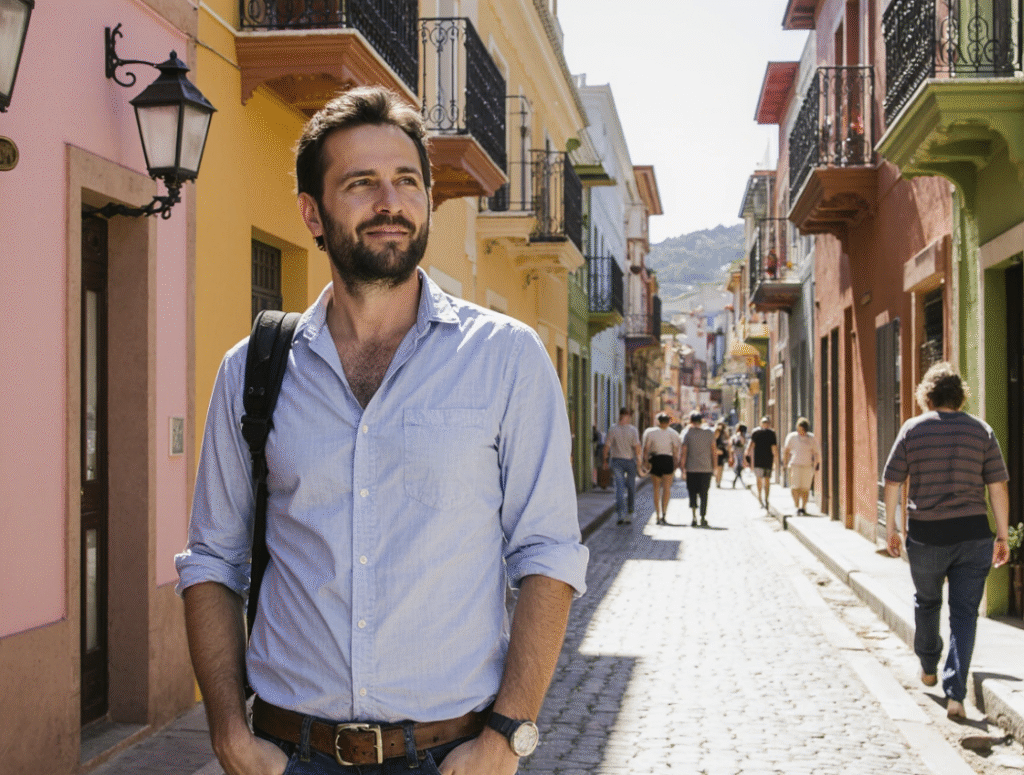
The alley measures 68 centimeters wide — barely wider than my outstretched arms. Two balconies hung so close that I could touch both walls simultaneously. A crowd of tourists pressed around me, snapping photos on the third step. Their guide recited the legend: star-crossed lovers, an angry father, a tragic ending. I took my photos and moved on.
Three days later, I was still thinking about that alley.
More about Callejon del Beso:
When Tourist Attractions Become Research Obsessions
Here’s what bothered me: every guide told a different version of the story. In one version, the girl’s name was Ana and her lover was Carlos. In another version, the woman was Carmen and the man was Luis. The father either stabbed his daughter or beat her to death. The young man either jumped from a mine shaft or simply disappeared from the narrative.
I’m Carlos Rodriguez, and I’ve spent eight years untangling the threads of this legend.
What started as casual curiosity became a full research project. I contacted the Guanajuato municipal archives. I interviewed elderly residents who remembered their grandparents telling the story. I compared newspaper accounts from the 1940s — when the tourism industry first promoted the alley — with oral histories collected in the 1920s.
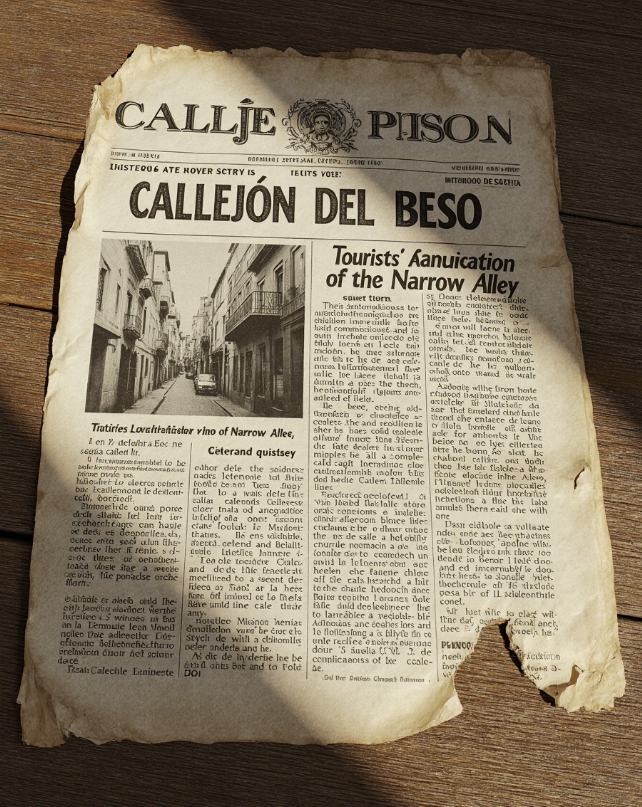
The versions contradicted each other constantly. That’s when I realized something crucial: the inconsistencies weren’t bugs in the story. They were featured.
What Does Callejón del Beso Actually Mean?
The alley sits on Cerro del Gallo hill in an 18th-century neighborhood of colonial architecture and winding cobblestone streets. Today, couples stand on the third step to kiss for a lifetime of luck in love.
But here’s what tourists miss: Callejón del Beso isn’t about historical accuracy. It’s about how communities create meaning through storytelling.
During the 18th century, Guanajuato became the world’s leading silver extraction center. Wealthy Spanish families controlled the mines. Poor Mexican laborers worked in dangerous conditions underground. The social divide was immense. Any love story crossing those class boundaries would have been scandalous.
The legend of Callejón del Beso captures that tension. It doesn’t matter if Ana or Carmen existed. What matters is that the story articulates something real about colonial Mexican society: the violence of patriarchal control, the impossibility of love across class lines, and the tragedy that results when economic power dictates personal choice.
I documented this theory in a 40-page research paper. My advisor called it “interesting but impractical.” Where was I going to publish folklore analysis about a single Mexican street?
That’s when I decided to build the website.
Why This Alley Deserves More Than Tourist Selfies
Most travel blogs about Callejón del Beso tell you where to stand and when to kiss. They give you the legend in 200 words and move on to the next attraction. But they skip the fascinating parts.
Why does superstition specify the third step? I traced this back to a 1940s tour guide who needed a memorable detail for his groups. How did the alley become one of Guanajuato’s most famous tourist attractions when it was just a nameless passage until the early 20th century? What happened to the original residents of those houses — the ones whose balconies created this famous space?
I spent two years interviewing descendants of families who lived on that street. One woman, now 83, remembered her grandmother refusing to rent the house because tourists kept climbing the stairs uninvited. Another man showed me property records proving his great-grandfather owned one of the buildings in 1910, decades before anyone called it the “Alley of the Kiss.”
These stories don’t fit neatly into an Instagram caption. But they matter.
The biggest mistake visitors make is treating Callejón del Beso as a photo opportunity. Spend 15 minutes there. Sit on a nearby step. Watch how local teenagers gather there after school, how elderly couples pause to remember their own courtship stories. The alley is still creating new love stories — just not the tragic kind tourists expect.
Looking at This Differently: When Folklore Becomes Commercialized
I need to be honest about something uncomfortable.
Callejón del Beso’s popularity has damaged it. The original residents moved out because of tourist traffic. The city now treats it as a revenue generator, not a living street. During my last visit in 2023, I counted 47 couples waiting to take their turn on the third step. A security guard monitored the line.
If you’re looking for authentic, unchanged Mexican culture, this isn’t it. The commercialization is complete. Street vendors sell “official” Callejón del Beso merchandise. Tour companies charge $15 per person for a five-minute guided visit. The houses themselves — once family homes — now host souvenir shops and overpriced cafes.
This bothers some travelers deeply. One visitor told me he felt like he’d walked into a “Mexican Disneyland.”
But here’s the counterpoint: tourism also preserved the alley. Without economic value, those colonial buildings might have been demolished for parking lots or modern apartments. The folklore might have disappeared entirely. Sometimes commercialization is the price of survival.
Your comfort with that tradeoff depends on what you value more — untouched authenticity or accessible preservation.
How Guanajuato Transformed Into a Tourism Destination
Thirty years ago, Guanajuato was not very popular with foreign tourists. The city was primarily a regional destination for Mexican visitors interested in independence history. The silver mines had closed. The economy struggled.
Then three factors converged. UNESCO designated the city a World Heritage Site in 1988. Mexican cinema featured Guanajuato’s colorful streets in popular films. Budget airlines began flying directly to nearby León. Tourism infrastructure exploded.
Callejón del Beso benefited from this transformation. What had been a footnote in city tours became a headline attraction. The legend was standardized and packaged. The kissing tradition was formalized.
If Guanajuato had developed differently — if the economy had recovered through manufacturing instead of tourism — Callejón del Beso might still be just a narrow alley where neighbors hung laundry across balconies. But we’d also have lost the communal investment in preserving that colonial architecture and those folklore traditions.
The current reality directly shapes how modern visitors experience the site. You’re not discovering a hidden gem. You’re participating in a well-developed tourist ritual. That’s not necessarily worse — just different.
What Makes My Website Different
When I launched the site in 2018, I had one goal: provide the context that tour guides skip.
I include archival photographs showing the alley in 1920, 1950, and 1980. I map the different versions of the legend geographically — which neighborhoods tell which variants. I explain the architecture: why colonial houses were built so close together, how the balconies functioned before tourism, what materials were used in construction.
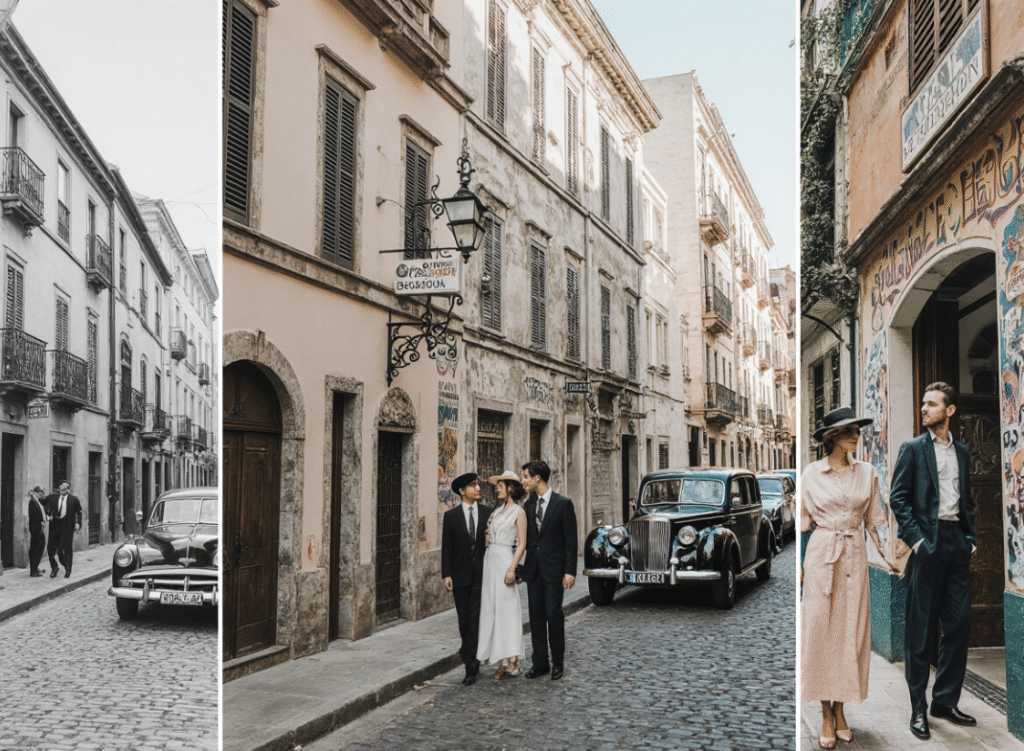
I also interview locals. Maria Hernandez, whose family ran a grocery store on that street for 60 years. Roberto Sanchez, a former tour guide who retired in 2015 after 30 years of telling the legend. These voices add depth that guidebooks can’t provide.
The website isn’t monetized. I’m not selling tours or promoting hotels. I built it because I genuinely believe this story — and this place — deserves better than being reduced to an Instagram location tag.
You can learn more about UNESCO World Heritage Sites and Guanajuato’s designation at UNESCO’s official World Heritage Centre.
Before you visit, spend 30 minutes reading about colonial Mexican social structures and the role of silver mining in Guanajuato’s development. This context transforms the legend from a simple love story into a commentary on class, power, and resistance. The alley will mean something different when you understand what was actually at stake for lovers crossing social boundaries.
Comparing the Legend Across Mexican Cities
| Aspect | Callejón del Beso (Guanajuato) | La Leyenda de los Volcanes (Puebla) | La Llorona (Various) |
| Historical Basis | Possibly inspired by actual colonial class conflicts | Based on Aztec mythology | Pre-Columbian origins with colonial adaptations |
| Primary Theme | Forbidden love across social classes | Love and sacrifice in warfare | Grief, guilt, and maternal loss |
| Tourist Development | Highly commercialized with specific ritual (third-step kiss) | Integrated into volcano tourism | Told throughout Mexico with regional variations |
| Original Purpose | Social commentary on class barriers | Explanation of natural landscape | Cautionary tale about river safety |
| Modern Function | Romantic attraction for couples | Cultural context for volcano visits | Urban legend and folklore tradition |
What makes Callejón del Beso unique is how completely the legend has merged with the physical space. You can’t separate the story from the architecture. Other Mexican legends are more portable — you can tell La Llorona anywhere. But this one only works in that specific 68-centimeter gap between two balconies.
What Visitors Should Actually Do
If you visit Callejón del Beso, go at 7 AM or after 6 PM. The morning light is spectacular, and the alley is nearly empty. You’ll have time to actually absorb the space instead of rushing through for a photo.
Walk the entire neighborhood. Explore the streets above and below the alley. Notice how the houses are built into the hillside, how the colonial architects used the terrain.
Read one version of the legend before you go. Then, when you arrive, notice which details the local guides emphasize or change. These variations aren’t mistakes — they’re the folklore tradition in action, adapting to each generation.
And yes, kiss on the third step if you want to. Superstition is a modern invention, but traditions have to start somewhere. You’re not accessing ancient magic — you’re participating in a contemporary ritual that connects you to the millions of other couples who’ve stood in that same spot.
Just remember: you’re standing where real families lived, where actual history happened, where complex social forces collided. The legend may be flexible, but the stones beneath your feet are old enough to have witnessed whatever truth inspired the story.
That’s worth more than seven years of good luck.