
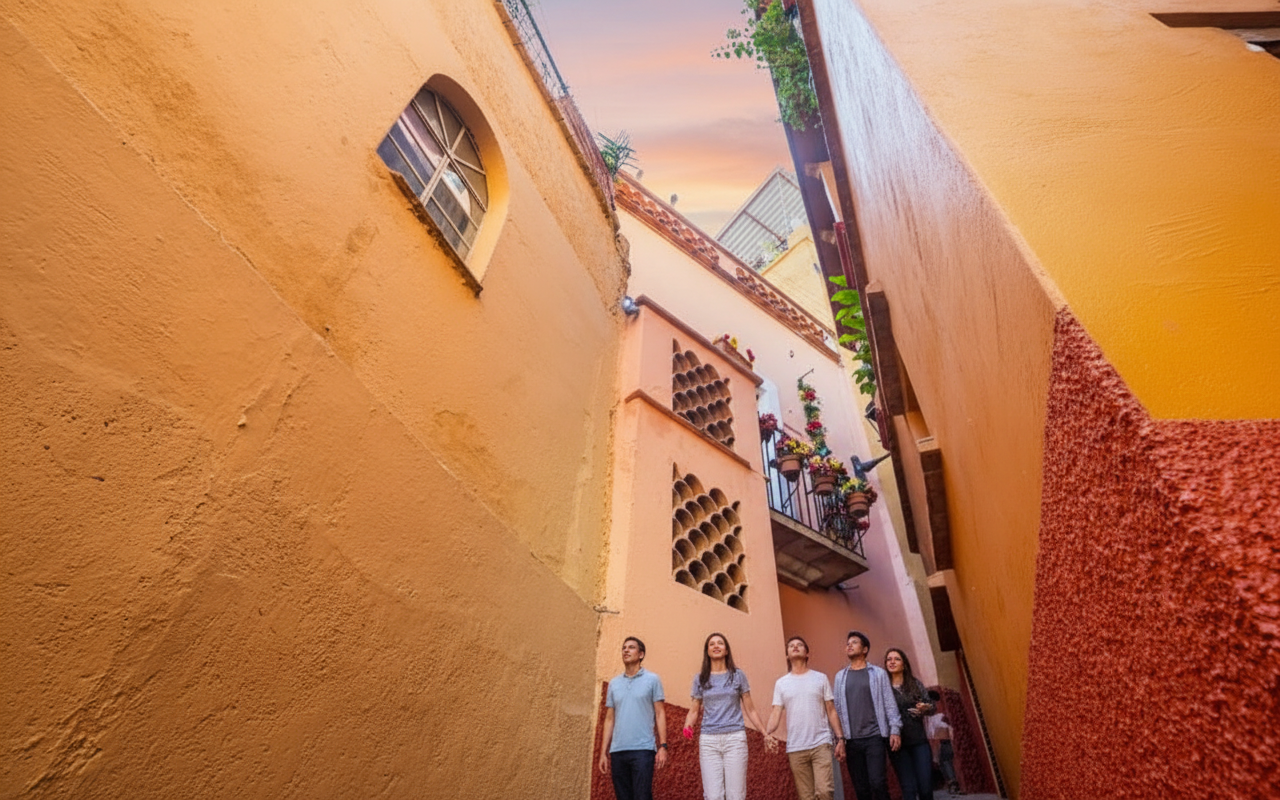
The Callejón del Beso Guanajuato story centers on Ana and Carlos—a wealthy Spanish girl and a poor miner whose forbidden romance ended when her father stabbed her for defying his orders. This tragic legend, set in Mexico’s narrowest alley (68 centimeters wide), has drawn millions of visitors to Guanajuato seeking the kiss on the third step that promises seven years of good luck.
A narrow passage in Guanajuato’s historic center holds one of Mexico’s most heartbreaking love stories. Today, the Callejón del Beso (Alley of the Kiss) draws thousands each year who come to stand where desperate love once found its only possible space. The Alley of the Kiss story has captivated travelers and romantics for generations, transforming colonial tragedy into modern romance.
More about Callejon del Beso:
- Callejon del Beso Tours
- The Alley of the Kiss (Callejon del Beso): Everything You Need to Know About Guanajuato’s Most Romantic Landmark
What Is the Callejón del Beso Guanajuato Story?
The Callejón del Beso legend tells how Ana, daughter of a wealthy Spaniard, fell in love with Carlos, a humble miner. When her father discovered their secret meetings across balconies separated by just 68 centimeters, he murdered Ana with a dagger. Carlos gave her one final kiss before taking his own life days later.
Ana met Carlos while walking through Guanajuato’s cobblestone streets. Their love was immediate. But in colonial Mexico, a miner could never marry a Spanish nobleman’s daughter.
The young couple began meeting in secret. But secrets in colonial Mexico rarely stayed hidden for long.
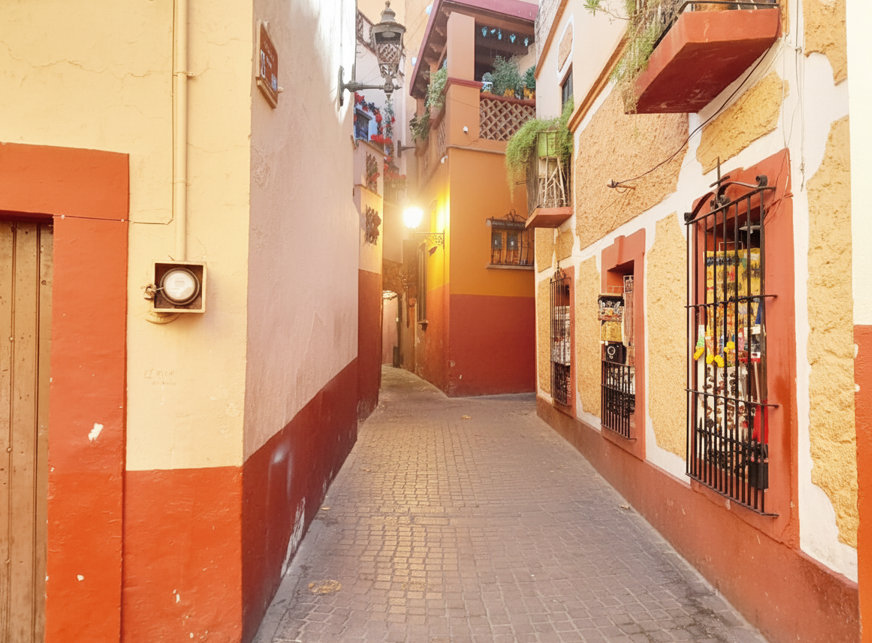
Alley of Kiss Story – real story of Callejon del Beso tragic ending location
When Ana’s father discovered their relationship, he locked her in her bedroom and vowed to marry her to a rich man of the same social class. Carlos faced what seemed like an impossible situation. The woman he loved was imprisoned in her own home, and he had no power to free her.
Then he noticed something unusual.
Ana’s window opened onto a narrow alley—so narrow that the balconies on opposite sides almost touched. If he could rent the house across from hers, they could talk. They could still be together, even if separated by just a few feet of empty space.
Carlos bought the house across the alley. Night after night, the lovers met on their balconies, reaching across the gap to touch hands and steal kisses.
Carmen and Luis Balcony: The Night Everything Changed
One night, Ana’s father heard murmuring from her room and discovered the young pair kissing from their balconies. He warned her directly: “If I see you kissing that man again, I will kill you.”
Ana didn’t believe him. How could a father kill his own daughter?
The next night, she met Carlos on the balcony again. Her father returned without saying a word. He went to his bedroom, came back with a dagger, and stabbed his daughter.
Carlos, frozen in horror, gave Ana one last kiss on the back of her hand as she died. Days later, unable to live without his beloved, Carlos jumped from the main shaft of La Valenciana Mine.
“Visitors often ask if the story is true. While we can’t verify every detail, records from the 18th century show the alley existed, and mining tragedies were common. What matters is how the legend captures the real tensions between social classes in colonial Mexico—and how love didn’t respect those boundaries.”
Is the Alley of the Kiss Story True?
Historical records from 18th-century Guanajuato confirm the alley existed and mining tragedies were common, but we cannot verify every detail of Ana and Carlos’s deaths. What matters is how the Callejón del Beso legend captures real tensions between social classes in colonial Mexico—and how love didn’t respect those boundaries.
Visitors often ask if the story is true. Mining records show hundreds of workers died in La Valenciana Mine during the 1700s. Parish registries document deaths of young women in similar circumstances. But Ana and Carlos? No death certificates exist with those names.
According to the Guanajuato State Tourism Board, over 8 million tourists visited Guanajuato in 2024, with Callejón del Beso ranking as the second most photographed site after the University of Guanajuato. Historical research by the University of Guanajuato’s History Department confirms that La Valenciana Mine employed over 3,000 workers during the 18th century, with mortality rates reaching 15-20% annually due to accidents and mercury poisoning.
Does that make the story less powerful? Consider this: the legend persists because it reflects documented realities. Spanish families did control their daughters’ marriages. Miners did remain poor despite extracting fortunes. These lovers represent countless real couples who faced identical barriers.
The story’s truth lies not in specific names but in the system that made such tragedies inevitable.
The Real Story of Callejon del Beso: Why This Story Still Matters
The Callejón del Beso Guanajuato story reveals how colonial Mexico’s rigid class system made relationships like Ana and Carlos’s impossible, reflecting social barriers that shaped Mexican history for centuries.
The legend isn’t just about romance. It’s a window into colonial Mexico, where wealthy Spanish families controlled their daughters’ lives and marriages to maintain power and increase fortunes. Miners like Carlos, despite working in the mines that made Guanajuato one of the richest silver-producing cities, remained poor.
Think of it like this: Imagine working in a diamond mine your entire life but never being able to afford even a small stone. That was Carlos’s world. The silver he extracted created wealth he’d never touch—and it kept him from the woman he loved.
From Silver Mining Town to Romance Capital: How Callejón del Beso Became Famous
The Alley of the Kiss story transformed from local folklore to global phenomenon over the past 20 years through social media, UNESCO recognition, and tour companies adding the “kiss on the third step” tradition. What grandmothers told grandchildren became Instagram content generating millions of posts.
Twenty years ago, Callejón del Beso was another narrow shortcut locals used between streets. No tourists lined up. No red-painted third step marked where to kiss. No photographers charged $10 for obligatory couples’ shots.
Three forces converged to change everything. First, UNESCO’s 1988 World Heritage designation put Guanajuato on international travel maps. Second, Mexican tour operators packaged the legend into walking tours, adding theatrical retellings and inventing the lucky-kiss ritual. Third—most powerful—Instagram exploded in the 2010s.
Posts showing couples kissing across impossibly close balconies went viral. Travel bloggers crowned it “Mexico’s most romantic spot.” The Callejón del Beso story became global content. A 20-meter alley transformed into a must-photograph destination receiving thousands of daily visitors during peak season.
Here’s an alternative path that nearly happened: In the 1970s-80s, many Mexican cities demolished colonial buildings for modern development. Guanajuato could have widened its narrow alleys for vehicle access, erasing Callejón del Beso entirely. Instead, city planners chose preservation over convenience, protecting the labyrinth of 3,000+ alleyways. That decision allowed this love story—and the physical space where it occurred—to survive for future generations.
The legend’s power lies not just in the narrative, but in the fact you can still stand exactly where Ana and Carlos stood, reach across the same narrow gap, and feel what they felt. Few legends offer that tangible connection.
How a Mining Town Became Mexico’s Most Romantic Destination
Guanajuato was founded by the Spanish in the early 16th century and became the world’s leading silver-extraction center in the 18th century. The city’s wealth built churches with gold altars and grand colonial buildings. But it also created rigid social divisions that made relationships like Ana and Carlos’s impossible.
The Callejón del Beso sits behind Plaza de los Ángeles in the historic center, in an 18th-century neighborhood of colonial architecture and winding cobblestone streets. Twenty years ago, this was just another narrow passageway locals used as a shortcut. Now? It’s one of Mexico’s most photographed streets.
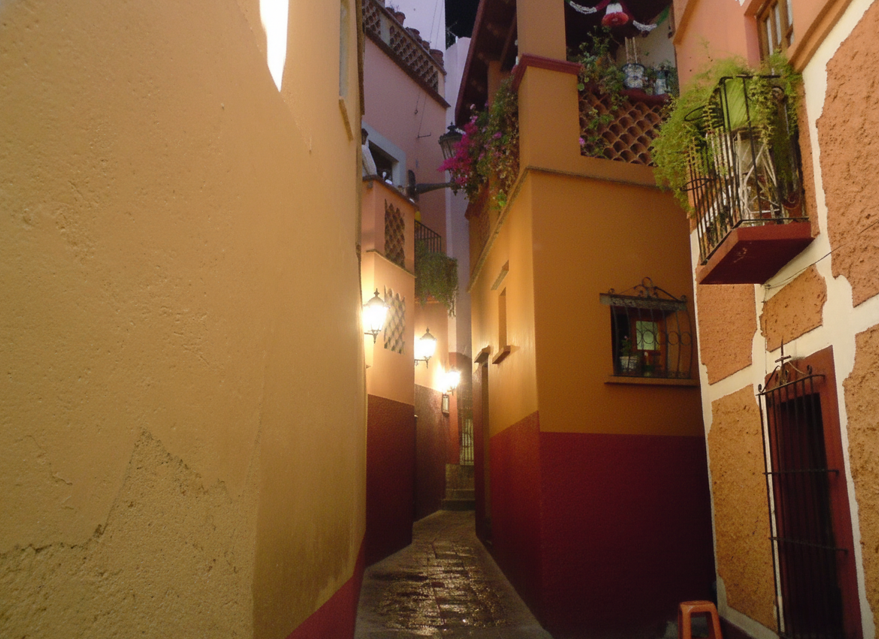
Full story of Callejon del Beso: narrow Alley of Kiss Story with the lover’s balconies
What changed? Social media turned a local legend into a global phenomenon. Instagram posts showing couples kissing across balconies went viral. Travel bloggers shared the story. Tour companies added it to their routes. The legend that grandmothers once told their grandchildren became an international tourist attraction, transforming this romantic story into a must-see destination.
Here’s an alternative path Guanajuato could have taken: The city might have demolished old colonial buildings for modern development, as many Mexican cities did in the 20th century. The alley could have disappeared entirely. Instead, Guanajuato preserved its history and became a UNESCO World Heritage Site, protecting the Callejón del Beso and allowing this love story to survive for future generations.
The Tradition That Brings Good Luck (or Bad)
Today, legend says couples who kiss on the third step of the alley will receive seven years of good luck in love. Kiss on the wrong step? Seven years of bad luck.
The third step is helpfully painted red so visitors don’t miss it. But here’s what no one tells you: you’ll likely wait in line. On weekends, especially during Mexican holidays, dozens of couples queue for their turn.
- Situation: Jessica and David visited on a Saturday afternoon in February. They arrived at 2 PM expecting a quick photo opportunity.
- Action: Instead of waiting 45 minutes in line, they returned at 7 AM the next morning before most tourists woke up.
- Result: They had the alley completely to themselves for 20 minutes, took unhurried photos, and avoided the awkwardness of kissing in front of 30 strangers with cameras.
What Nobody Tells You About Visiting
Most travel guides tell you to visit Callejón del Beso. Few explain how to do it right—or what you’re actually giving up.
The Three Big Mistakes (and Their Real Costs)
Visiting only the Callejón del Beso and missing Guanajuato’s real treasures
The Callejón del Beso is just 20 meters long—visiting only this alley means spending more time traveling to Guanajuato than actually experiencing it, wasting $50-100 in transport costs for a five-minute photo opportunity.
It’s the most famous spot. Tour buses stop here. Every Instagram post about Guanajuato shows this alley featuring the Alley of the Kiss story.
But here’s what they don’t tell you: The alley itself takes five minutes to walk through. If you come just for this, you’ll miss the city’s real treasures—its network of over 3,000 alleyways, underground tunnels originally built for flood control, baroque churches with gold-leaf altars, and hillside neighborhoods where the Callejón del Beso legend actually makes sense when you see how closely buildings crowd together.
Think of it this way: visiting only Callejón del Beso is like going to Paris just to see the Eiffel Tower’s gift shop.
You waste $50-100 in travel costs (bus tickets from Mexico City run $28-51 USD each way as of 2025; local taxis cost $3-6 USD per trip according to current Guanajuato transport rates) for an experience lasting five minutes instead of discovering a city that could transform your understanding of Mexican colonial history.
Plan two to three days in Guanajuato. Visit the alley early morning or late afternoon. Spend remaining time exploring the University of Guanajuato campus, Alhóndiga de Granaditas museum, Pipila Monument viewpoint, and Teatro Juárez. Experience the city that created this legend.
Arriving on a weekend without a plan
Guanajuato is popular with Mexican tourists, especially during holidays and weekends. The alley gets packed with people, photographers charging for pictures, and vendors selling souvenirs.
Compromise: Weekend visits mean atmosphere and energy—mariachi bands, estudiantinas (student musical groups), and a festive vibe. But you’re trading privacy for that experience. According to Antigua Trece travel guide, early weekday mornings offer solitude.
Visiting during midday heat
The alley has steep steps leading up its 20-meter length. Guanajuato sits at 6,600 feet elevation. Climbing stairs in thin air under midday sun isn’t romantic—it’s exhausting.
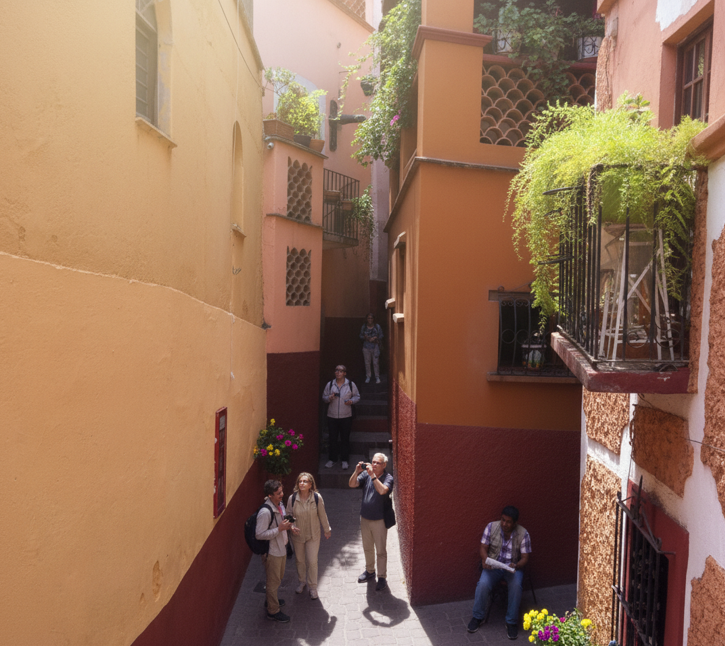
Full story of Callejon del Beso with the tragic ending of Callejón del Beso legend – Alley of Kiss Story
You’ll arrive sweaty, out of breath, and focused on physical discomfort rather than the story. Plus, harsh midday light creates terrible photos. Budget travelers on sites like The World Travel Index report spending $50-70 per day in Guanajuato—wasting even an hour of your day on bad timing adds up.
“The best light for photos is 6:30-8:00 AM or after 5:30 PM. Early in the morning, you’ll see the alley in soft golden light with almost no crowds. It’s the difference between a rushed, crowded experience and actually feeling what Carlos and Ana might have felt.”
Where Is Callejón del Beso Located in Guanajuato?
Callejón del Beso sits south of Guanajuato’s historic center near Plaza de los Ángeles, off El Patrocinio street. Look for the vibrant green water fountain marking one entrance—the alley extends 20 meters uphill with the famous kissing balconies visible from the street below.
The location matters because it reveals how Guanajuato’s geography made the Alley of the Kiss story possible. The city was built in a narrow valley without room to expand. Houses climbed steep hillsides, creating impossibly narrow passages between buildings. The alley wasn’t designed for romance—it was a practical solution to limited space.
Love found a way to use that constraint.
Getting there in 2025: From Jardín de la Unión (main plaza), walk south 8-10 minutes through Calle Sopeña. Pass Plaza de los Ángeles on your right. Turn left at the green fountain. The alley entrance is marked by a small plaque explaining the Callejón del Beso Guanajuato story in Spanish.
Alternatively, take any local bus marked “Centro” ($0.50 USD, January 2025 rate) and ask the driver for “Callejón del Beso”—most know the stop.
During evenings, El Patrocinio hosts food stalls and a small night market where you can try local specialties like enchiladas mineras and guacamayas (torta rolls filled with pork rinds) for $2-4 USD per item.
How Does Guanajuato Compare to Other Mexican Destinations?
| Aspect | Callejón del Beso/Guanajuato | San Miguel de Allende (1.5 hours away) |
| International tourists | Few foreign tourists; mostly Mexican visitors and Spanish students | Major international destination |
| Authenticity | Locals speak Spanish; real Mexican city vibe | English widely spoken; tourist-adapted |
| Price level | Budget to mid-range ($50-70/day per travel cost data) | Premium prices on everything |
| Architecture | Colonial silver-mining town; UNESCO site since 1988 | Colonial charm; UNESCO site; more polished |
| Best for | Travelers wanting Mexican culture without foreign tourist crowds | Comfort-focused travelers; expat community |
Choosing Guanajuato over San Miguel means accepting rougher edges—steeper hills, fewer English menus, less tourist infrastructure. But you’re trading convenience for authenticity. The large student population means plenty of cafes, bars, and energy, but it’s Mexican energy, not tourist energy.
For Whom This Place Won’t Work
Let’s be honest. Not everyone should visit.
Skip Guanajuato if you:
- Have serious mobility issues. The city is built on steep hillsides. The Callejón del Beso has steep steps. Most attractions require significant walking on uneven cobblestones and stairs. There’s no way to experience Guanajuato without climbing.
- Need perfectly predictable experiences. This is a working Mexican city, not a theme park. Festivals close streets without warning. Restaurants run out of dishes. Things happen on “Mexican time.”
- Expect English everywhere. Locals appreciate when tourists try Spanish. Basic Spanish phrases will dramatically improve your experience.
The Legend of Callejón del Beso Lives On
Some say the spirits of Ana and Carlos still haunt the alley, and on full moon nights, you can hear their whispers and see shadows of the lovers on the balconies. Many visitors claim they’ve felt a presence.
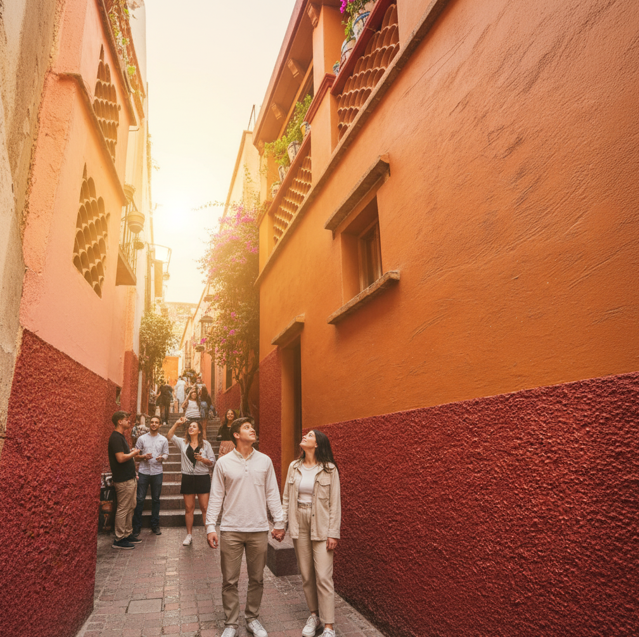
Real story of Callejon del Beso and Carmen and Luis balcony legend full story location
Does kissing on the third step really bring seven years of good luck? Nobody knows. But here’s what’s real: thousands of couples return to report engagements, marriages, and anniversaries that started with that kiss. Whether it’s luck, intention, or just a beautiful moment that strengthens a relationship, something happens in that alley.
The story changed how Guanajuato sees itself. The tale has woven itself into the city’s culture. Local children grow up hearing about Ana and Carlos. Students at the University of Guanajuato bring dates here. Families take photos at the spot their parents and grandparents once visited.
What You Actually Need
Based on current travel costs from Never Ending Footsteps budget guide and local expense data:
- Comfortable walking shoes: The entire historic center is cobblestone and hills.
- Cash in small bills: For tips to photographers (typically $5-10 USD), food vendors, and market purchases. Many places don’t take cards. ATM withdrawals and card transactions work but local markets prefer cash.
- Basic Spanish phrases: Even just “buenos días” and “gracias” transform interactions.
- Early morning alarm: Beat the crowds; get better photos; experience the alley in peace.
- Budget of $150-210 for three days: This covers mid-range accommodation ($400-800 pesos or $21-42 USD per night according to Yunglava travel costs), meals (street food tacos cost $1-2 USD; sit-down meals $7-15 USD per local pricing data), local taxis ($2-5 per ride), and entrance fees to museums.
For current 2025 pricing on accommodations and activities, consult Mexico’s official tourism portal Visit Mexico or check real-time updates on the Guanajuato Tourism Instagram which posts daily crowd reports and weather conditions.
Why the Callejón del Beso Story Still Matters in 2026
The power of the Callejón del Beso legend isn’t just Ana and Carlos’s tragic ending—it’s what their story reveals about love pushing against boundaries, about class divisions that once seemed permanent, and about how an alley barely wider than outstretched arms could contain so much longing.
When you stand on that third step and lean across to kiss someone, you’re not just following a tradition invented for tourists. You’re standing exactly where desperation and creativity met, where two people refused to let circumstances separate them, where love found the smallest possible space and claimed it anyway.
The latest pilgrims to Callejón del Beso aren’t just tourists—they’re couples marking anniversaries, proposing marriage, or returning with children to share the Alley of the Kiss story that started their own love stories. The legend has become self-perpetuating: each kiss on the third step adds another layer of hope to the place, another reason for the next couple to believe.
What makes the Callejón del Beso Guanajuato story endure isn’t just the tragic ending—it’s the defiant middle. Ana and Carlos didn’t accept separation. They found the smallest possible loophole in their impossible situation and exploited it. They turned a 68-centimeter gap into their entire world.
That kiss might bring seven years of luck. Nobody knows. But here’s what’s real: thousands of couples return to report engagements, marriages, and anniversaries that started with that kiss. Whether it’s luck, intention, or just a beautiful moment that strengthens a relationship, something happens in that alley.
The Alley of the Kiss story asks a simple question: How much space does love actually need? Ana and Carlos proved the answer is less than a meter—just enough room to reach across, touch hands, and steal a kiss. Their legend survives because it captured a universal truth in one impossibly narrow Mexican alley: love doesn’t require grand gestures or perfect circumstances.
It just needs to be stronger than whatever tries to keep it out.
That’s why people keep returning to this 68-centimeter passage, why they stand on that red-painted third step, why they lean across the gap and kiss—not just for luck, but to prove, once more, that love can thrive in the smallest spaces when nothing else can stop it.